
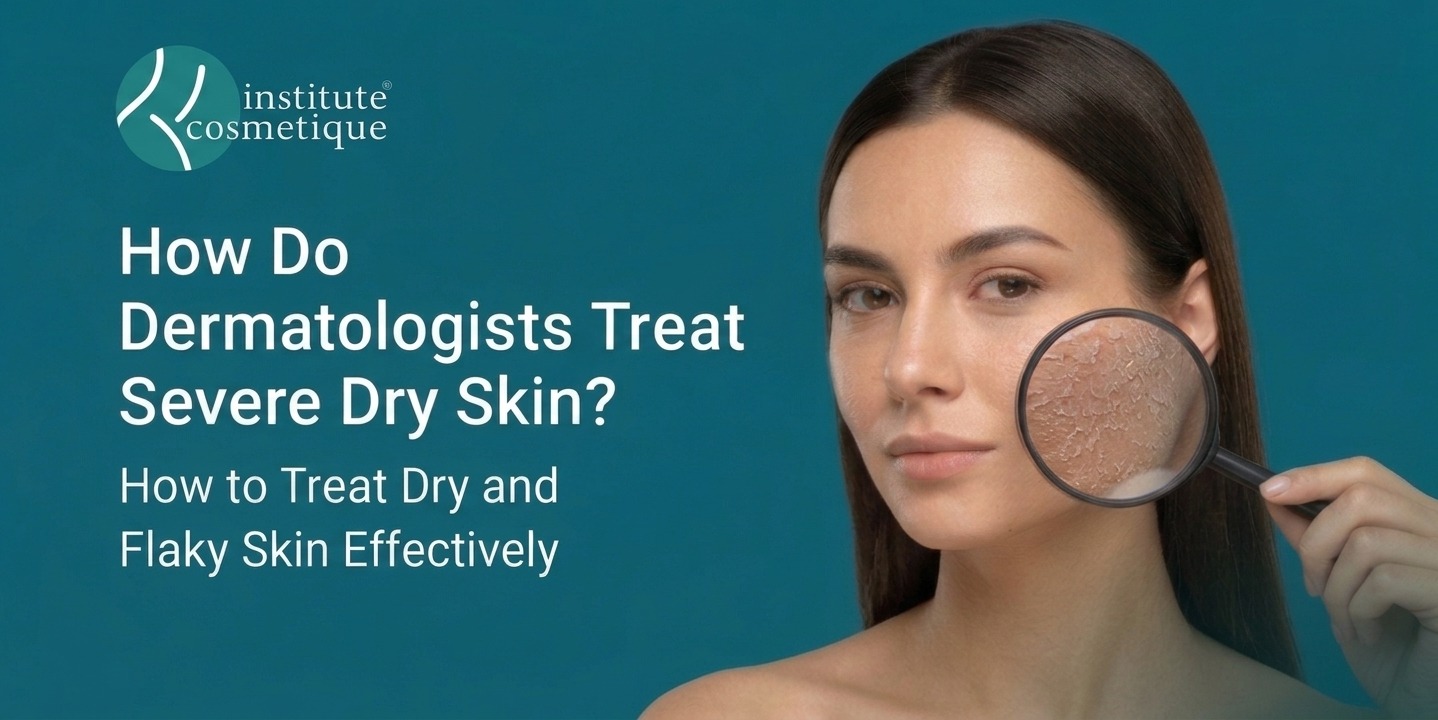
Your skin has had every comfort: rich creams, fragrance-free wash, water that’s barely warm. It still cracks at the knuckles, flakes along the shins, and itches most when you’re trying to sleep.
When that happens, the cause is rarely your routine. Something underneath is stopping the skin from recovering, and dermatologists begin by searching for exactly that. Any dry skin treatment you try before then is a guess, since what works depends on what’s causing the dryness in the first place.
The Difference Between Dry and Severely Dry
Dry skin (xerosis) is skin that loses water faster than it can keep it. Most people deal with a mild version in winter, and a good cream fixes it.
Severe dryness behaves differently. It lingers for weeks, looks scaly or thickened, and starts to cause real trouble: broken sleep, painful cracks, skin that stings when you moisturize. If that sounds familiar, basic skincare has probably hit its limit.
What Is Going Wrong Underneath
Think of your skin’s surface as a wall of bricks held together by mortar. The bricks are skin cells. The mortar is a blend of fats, including ceramides. When the mortar crumbles, water slips out and irritants slip in, and the skin turns dry, tight, and reactive.
Several things can wear that mortar down:
- Daily habits: hot showers, strong soaps, constant handwashing, heavy exfoliating
- Climate: cold air outside, heaters and air conditioners inside
- Skin conditions: eczema, contact dermatitis, psoriasis, ichthyosis, even fungal infections that pass for dry patches
- Body and age: thyroid trouble, diabetes, certain medicines, and the natural drop in oil production over time
Two people can have the same flaky patch for completely different reasons. That’s why guessing with products often goes nowhere.
Signs It’s Time to Book an Appointment
Don’t wait it out if you notice any of these:
- Two weeks of consistent moisturizing hasn’t made a difference
- Itching is constant or wakes you at night
- Skin is bleeding, split, or painful
- You see crusting, oozing, or yellow fluid (possible infection)
- The dryness is spreading
- A child has stubborn dry patches, since eczema often starts early
Inside the Appointment
A dermatologist works like a detective here. Expect questions first: when it began, where it shows up, what products touch your skin, what your work involves, and whether eczema or psoriasis runs in your family.
Then they read the skin itself. Location and pattern are strong clues:
| What they see | What it may suggest |
| Dry, itchy patches in elbow and knee creases | Eczema |
| Thick, sharply outlined plaques | Psoriasis |
| Fine, fish-scale flaking over large areas | Ichthyosis |
| Dryness only where a product or material touches | Contact dermatitis |
Most people stop at this stage. If the picture is still unclear, the next steps are patch testing for allergies, a skin scraping to rule out fungus, or blood tests for thyroid or blood sugar problems. A biopsy is uncommon.
The Treatments Dermatologists Actually Use
A good dry skin treatment plan has three jobs: rebuild the barrier, quiet the inflammation, and lock moisture in.
Step one: heavier moisturizers. Ointments and thick creams beat watery lotions. Ceramides, glycerin and petrolatum are the key ingredients. Apply twice daily, and once right after bathing while skin is still damp.
Step two: softening thick skin. Urea creams (10 to 40 percent) smooth rough heels, elbows and hardened patches. Lactic acid is a gentler alternative. Salicylic acid handles heavy scaling but can sting raw skin.
Step three: calming inflammation. If redness and itch are part of the picture, a short course of prescription steroid cream often brings fast relief. Strength is matched to the body area, mild for the face and folds, stronger for palms and soles. Where steroids aren’t ideal, tacrolimus, pimecrolimus or crisaborole can be used instead.
Extra tools for flares:
- Wet wraps for severe eczema: cream under a damp layer, covered by a dry one, for short periods
- Night-time antihistamines when itching steals sleep
- Antibiotic or antifungal treatment if broken skin becomes infected
For stubborn cases: narrowband UVB light, oral medications like methotrexate, biologics or oral retinoids for ichthyosis, all under close supervision.
Where the Dryness Is Matters
- Hands: Ointment-style hand creams, cotton-lined gloves for wet chores, occasionally a brief steroid ointment course.
- Heels and feet: Strong urea creams, sometimes professional removal of thick skin. Extra care if you have diabetes.
- Face: Fragrance-free barrier creams and gentler anti-inflammatory options.
- Lips: Plain petrolatum, and a look at lip balms or toothpaste as triggers.
- Scalp: Often seborrheic dermatitis or psoriasis, so medicated shampoo works better than moisturizer.
Why Does Severe Dry Skin Keep Coming Back?
Dryness that returns is usually a sign that something slipped back in. Maybe the cream was dropped as soon as the skin looked normal, or the hot showers and scented products crept back into the routine. Sometimes a prescribed course was stopped halfway or an underlying eczema was never treated at all.
Chronic skin conditions can be kept under good control, but only with steady upkeep. Think of it as maintenance, not a single fix
Supporting Your Skin at Home
- Choose a fragrance-free cleanser and use it only where needed
- Keep showers lukewarm and brief
- Pat dry, then moisturize within minutes
- Wear soft cotton; wash clothes in mild detergent
- Add a humidifier to dry rooms
- Leave irritated skin alone: no scratching, scrubbing or exfoliating
If anything burns or worsens redness, stop using it and get advice.
How Soon Will Things Improve?
Itching and roughness often ease within one to two weeks of the right treatment. Thick or cracked areas can take several weeks. Follow-up visits matter, since your dermatologist may reduce the steroid once inflammation settles while keeping moisturizer going long term.
Frequently Asked Questions
Can severe dry skin be cured for good?
It depends on the cause. Dryness from weather or habits often resolves with the right care. Chronic conditions like eczema usually need long-term management.
What is the best moisturizer for extremely dry skin?
Thick creams and ointments with ceramides, glycerin, or petrolatum. The right pick depends on sensitivity and the area being treated.
Is dry skin the same as eczema?
No. Dryness is a symptom. Eczema adds inflammation, strong itching, and flare-ups. Dryness that keeps returning deserves a proper check.
Are steroid creams safe for dry skin?
Yes, when prescribed and used as directed. Problems come from long-term use without supervision.
The Real Fix
More cream only goes so far. Lasting relief starts with knowing why your skin is dry and treating that cause directly”When ordinary skincare stops working, professional dry skin consultation can help you understand the cause and explore suitable treatment options.”