
A Dermatologist-Approved Guide to Treating Melasma, Dark Spots, and Uneven Skin Tone
A clear, even-looking complexion is often described as “glowing skin,” but healthy radiance has little to do with changing your natural skin color. True skin radiance comes from maintaining a healthy skin barrier, protecting the skin from environmental damage, and gradually addressing uneven pigmentation.
For people in Pakistan, pigmentation can be particularly frustrating. Strong sunlight, frequent outdoor exposure, hormonal changes, acne-related inflammation, and the natural aging process can all contribute to dark spots and uneven skin tone. Melasma can also be persistent and may become more noticeable in people with darker skin tones.
The good news is that modern skincare offers several evidence-informed approaches to improving the appearance of hyperpigmentation.
The key is to think about restoring natural radiance rather than bleaching the skin.
Brightening vs. Bleaching: What’s the Difference?
The words “brightening” and “bleaching” are sometimes used interchangeably in beauty marketing, but they represent very different concepts.
Brightening means improving the appearance of uneven pigmentation, fading the appearance of dark spots, and helping the complexion look more uniform while respecting your natural skin tone.
Bleaching, in contrast, implies intentionally altering or reducing the skin’s natural pigmentation. Unsafe bleaching practices can cause irritation, burns, uneven pigmentation, and other skin problems.
Modern skincare should focus on safe brightening, not trying to achieve an unnatural skin color.
This distinction is particularly important when treating conditions such as melasma. Dermatologists describe the goal of melasma treatment as reducing excess pigment and restoring an even appearance to the person’s natural skin color.
Common Pigmentation Concerns in Pakistan
Several types of pigmentation can affect Pakistani women and men, including:
- Melasma
- Freckles
- Sun-induced pigmentation
- Post-acne dark marks
- Post-inflammatory hyperpigmentation
- Uneven skin tone
- Age-related dark spots
Melasma commonly appears as brown or gray-brown patches, particularly on areas such as the cheeks, forehead, nose, and upper lip. Sunlight can worsen it, while hormonal factors, pregnancy, certain medications, and other triggers can also play a role.
Because different pigmentation conditions can look similar, persistent or unusual pigmentation should ideally be evaluated by a dermatologist.
When choosing an over-the-counter brightening product, consumers should also pay attention to formulation quality and professional oversight. QHC positions its Mela Block formulation as being developed with an American Board-Certified Dermatologist, making dermatologist involvement an important part of its product positioning.
The Science-Backed Brightening “Dream Team”
There is no single miracle ingredient that eliminates every type of pigmentation. However, several cosmetic ingredients have been studied for their role in improving the appearance of uneven skin tone.
Alpha Arbutin: A Targeted Approach to Pigmentation
Alpha arbutin is a form of arbutin used in cosmetic formulations designed to address the appearance of hyperpigmentation.
Arbutin is associated with inhibition of tyrosinase, an enzyme involved in melanin production. By influencing this pathway, arbutin may help reduce the formation of excess pigment.
DermNet lists arbutin among topical agents used for hyperpigmentation.
This makes alpha arbutin an interesting ingredient for people looking for a pigmentation cream for face that focuses on uneven tone rather than altering the skin’s natural color.
Kojic Acid for Uneven Pigmentation
Kojic acid is another well-known ingredient used in pigmentation-focused skincare.
It can interfere with tyrosinase activity and is used in cosmetic products intended to improve the appearance of dark spots and uneven pigmentation. Dermatology resources list kojic acid among topical options used for pigmentation concerns.
However, more active does not always mean better. Kojic acid can irritate some people’s skin, so introducing it gradually and following product instructions is important.
Glutathione: Antioxidant Interest in Brightening
Glutathione is a naturally occurring antioxidant that has attracted significant interest in the cosmetic and dermatology space.
It is sometimes described in beauty marketing as a “brightening from within” ingredient. However, it is important not to overstate the evidence or promise dramatic changes in natural skin color.
For topical skincare, glutathione may be included as part of an antioxidant-focused formulation. Consumers should judge a product based on its complete formulation rather than expecting one ingredient to transform pigmentation overnight.
Niacinamide: More Than a Brightening Ingredient
Niacinamide, a form of vitamin B3, is one of the most versatile ingredients in modern skincare.
It can support the skin barrier, improve the appearance of uneven tone, and help regulate the appearance of excess oil. Niacinamide has also been studied for its ability to reduce the transfer of melanosomes—the pigment-containing structures—from melanocytes to surrounding keratinocytes.
DermNet lists niacinamide among ingredients used for pigmentation concerns.
This makes niacinamide particularly useful when pigmentation occurs alongside an impaired barrier, dullness, or oily skin.
Why SPF Is Non-Negotiable for Brightening
If there is one step that should never be skipped when treating pigmentation, it is sun protection.
UV radiation stimulates pigment production and can make existing dark spots and melasma more noticeable. Without consistent protection, new pigmentation can continue to develop even while you are using a brightening product.
The American Academy of Dermatology recommends broad-spectrum sunscreen with SPF 30 or higher as part of melasma care, along with other sun-protective measures.
For people with darker skin tones, visible light can also contribute to hyperpigmentation and melasma. Tinted sunscreens containing iron oxides can provide additional protection against visible light.
QHC Mela Block SPF 30: Brightening and Protection
For people who prefer a simplified routine, a product that combines pigmentation-focused ingredients with sun protection can be convenient.
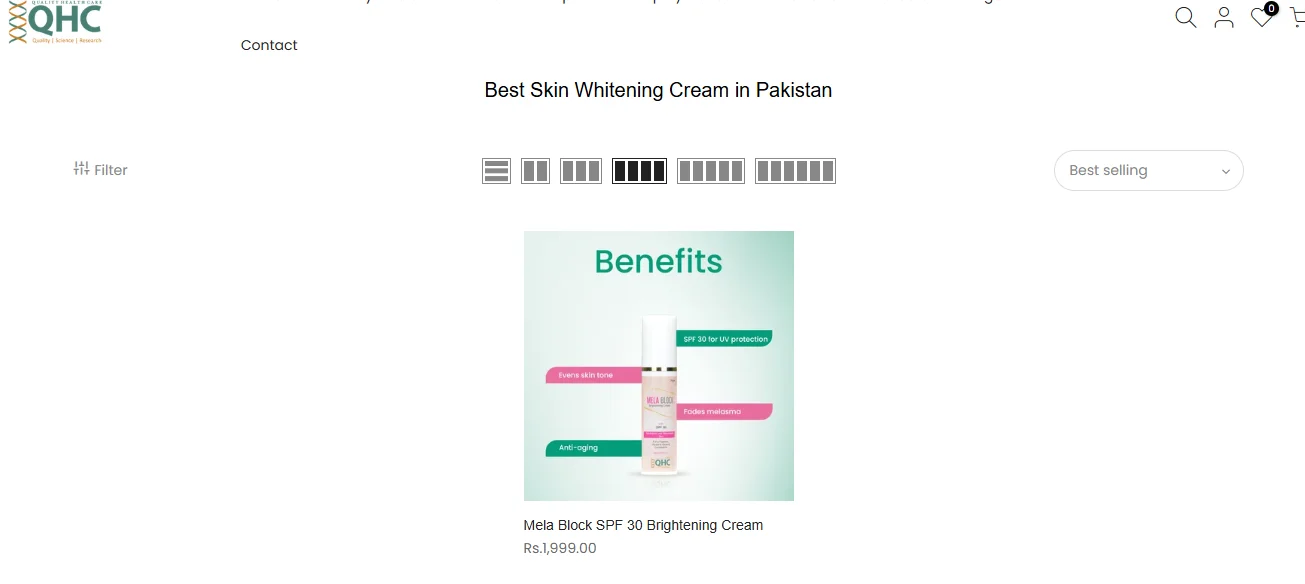
QHC Mela Block SPF 30 is positioned as a brightening cream that combines active ingredients with SPF 30, providing a two-in-one approach to daily skincare.
However, product instructions should always be followed carefully. If you spend significant time outdoors, sweat, swim, or remain in direct sunlight, sunscreen generally needs to be reapplied as directed.
For melasma in particular, sunscreen should be considered part of the treatment strategy rather than an optional cosmetic step.
How to Use a Brightening Cream Correctly
Adding a brightening product to your routine does not mean you need ten different skincare products.
A simple routine can be surprisingly effective when followed consistently.
Step 1: Cleanse Gently
Start with a gentle cleanser to remove dirt, oil, sunscreen, and makeup.
Avoid aggressive scrubbing. Skin irritation can sometimes worsen pigmentation, particularly in people who are prone to post-inflammatory hyperpigmentation. The AAD recommends gentle, fragrance-free skincare when managing melasma because irritating products can make dark patches more noticeable.
Step 2: Tone if Needed
Toner is optional.
If you use one, choose a gentle formula that complements your skin type. Avoid using strongly astringent products simply because you are trying to “remove” pigmentation faster.
Step 3: Apply Your Brightening Cream
Apply your brightening product evenly according to its label directions.
A small amount is usually sufficient for the entire face. Avoid applying excessive product in the belief that more will produce faster results.
If your product contains multiple active ingredients, consistency is more important than quantity.
Step 4: Apply SPF
If your brightening cream does not provide adequate sun protection, apply a separate broad-spectrum sunscreen.
In the morning, the basic order is:
Cleanser → Toner → Brightening Product → Moisturizer if needed → Sunscreen
If your brightening cream already contains SPF, follow the product’s instructions and ensure you apply enough to obtain the stated level of protection.
How Long Does It Take to See Results?
One of the biggest problems with pigmentation skincare is unrealistic expectations.
Melasma and hyperpigmentation usually do not disappear overnight.
The American Academy of Dermatology notes that melasma treatment can take 3 to 12 months to produce visible results, depending on the individual and treatment approach.
Similarly, some dark spots can take several months to fade. The depth and cause of pigmentation matter.
Therefore, judge your skincare routine based on gradual improvement rather than expecting dramatic changes within a few days.
Taking monthly photographs under similar lighting can be more useful than checking your skin in the mirror every morning.
Common Brightening Mistakes to Avoid
1. Skipping Sunscreen
This is perhaps the biggest mistake.
Brightening products cannot compensate for continuous sun exposure. UV and visible light can stimulate pigmentation and make existing melasma harder to control.
2. Expecting Overnight Results
Pigmentation develops over time, and fading it also takes time.
Give your routine consistency and realistic expectations.
3. Applying Too Much Product
Using more cream does not necessarily mean faster results.
Excessive application can increase the risk of irritation, greasiness, or clogged pores depending on the formulation.
4. Using Too Many Active Ingredients
Combining several strong acids, retinoids, scrubs, and brightening agents without a plan can irritate the skin.
Inflammation itself can contribute to post-inflammatory hyperpigmentation.
A simple routine that protects the barrier is often preferable to an aggressive routine that constantly causes irritation.
5. Using Unsafe Bleaching Products
Never use household bleach or unregulated products to lighten pigmentation.
The AAD specifically warns against applying liquid bleach to dark spots.
Also be cautious about products making dramatic promises such as “instant whitening” or promising to permanently change your natural complexion.
Best Brightening Cream in Pakistan: What Should You Look For?
Searching for the best brightening cream in Pakistan can produce hundreds of results.
Instead of choosing based only on popularity, examine the product more carefully.
Consider:
- Which active ingredients does it contain?
- Is the formulation suitable for your skin type?
- Does it have clear usage instructions?
- Is it produced by a reputable brand?
- Is professional formulation or dermatological input involved?
- Does it complement a daily sun-protection routine?
- Does the product make realistic claims?
A good brightening product should be part of a broader skincare strategy rather than presented as a miracle solution.
Melasma Treatment Cream: When Should You See a Dermatologist?
Over-the-counter skincare can be useful for mild pigmentation concerns, but melasma can be complicated.
If pigmentation is persistent, spreading, severe, or repeatedly returning, consider consulting a dermatologist.
A dermatologist can determine whether the discoloration is actually melasma or another condition and can develop a treatment plan based on factors such as your skin type, pigmentation depth, triggers, and medical history.
Prescription treatments such as hydroquinone, tretinoin combinations, azelaic acid, or other therapies may be appropriate in selected cases, but they should be used under appropriate medical guidance.
Procedures such as chemical peels and laser treatments can also help some patients but may worsen pigmentation when performed incorrectly, especially in darker skin tones.
Dark Spots Removal Cream: Focus on Prevention Too
When people search for a dark spots removal cream, they often focus entirely on fading existing marks.
But preventing new pigmentation is equally important.
Dark spots can develop following acne, inflammation, injury, or excessive sun exposure. If the trigger continues, new marks may appear while old ones are fading.
A complete approach therefore includes:
Identify the trigger → Protect the skin → Use appropriate active ingredients → Maintain the skin barrier → Be consistent
For sun-related pigmentation, daily sunscreen is particularly important. Dermatologists recommend broad-spectrum protection, and tinted sunscreen containing iron oxide may provide additional visible-light protection for people prone to hyperpigmentation.
The Bottom Line: Radiance Comes From Healthy Skin
Brightening should never mean trying to erase your natural skin tone.
The goal is healthier-looking, more even skin with reduced appearance of excess pigmentation.
Ingredients such as alpha arbutin, kojic acid, glutathione, and niacinamide can play useful roles in a carefully formulated skincare routine. But ingredients are only one part of the equation.
Daily sun protection, gentle skincare, consistency, and realistic expectations are equally important.
For Pakistani skin exposed to strong sunlight and visible light, protecting against further pigmentation is particularly important. Melasma can be persistent, so treating it is often a long-term process rather than a quick cosmetic fix.
Whether you are looking for the best brightening cream in Pakistan, a melasma treatment cream, a dark spots removal cream, or a pigmentation cream for face, choose products based on their formulation, safety, and suitability for your skin.
Most importantly, remember that beautiful skin does not require changing your natural complexion. The science of radiance is about supporting healthy skin, protecting it from damage, and restoring a more even, natural-looking appearance.